
Species-Specific
Keeping Japanese black pine alive on the equator
Last updated 24 July 2026
Black pine wants a winter it will never get here. What to change, and what to accept.
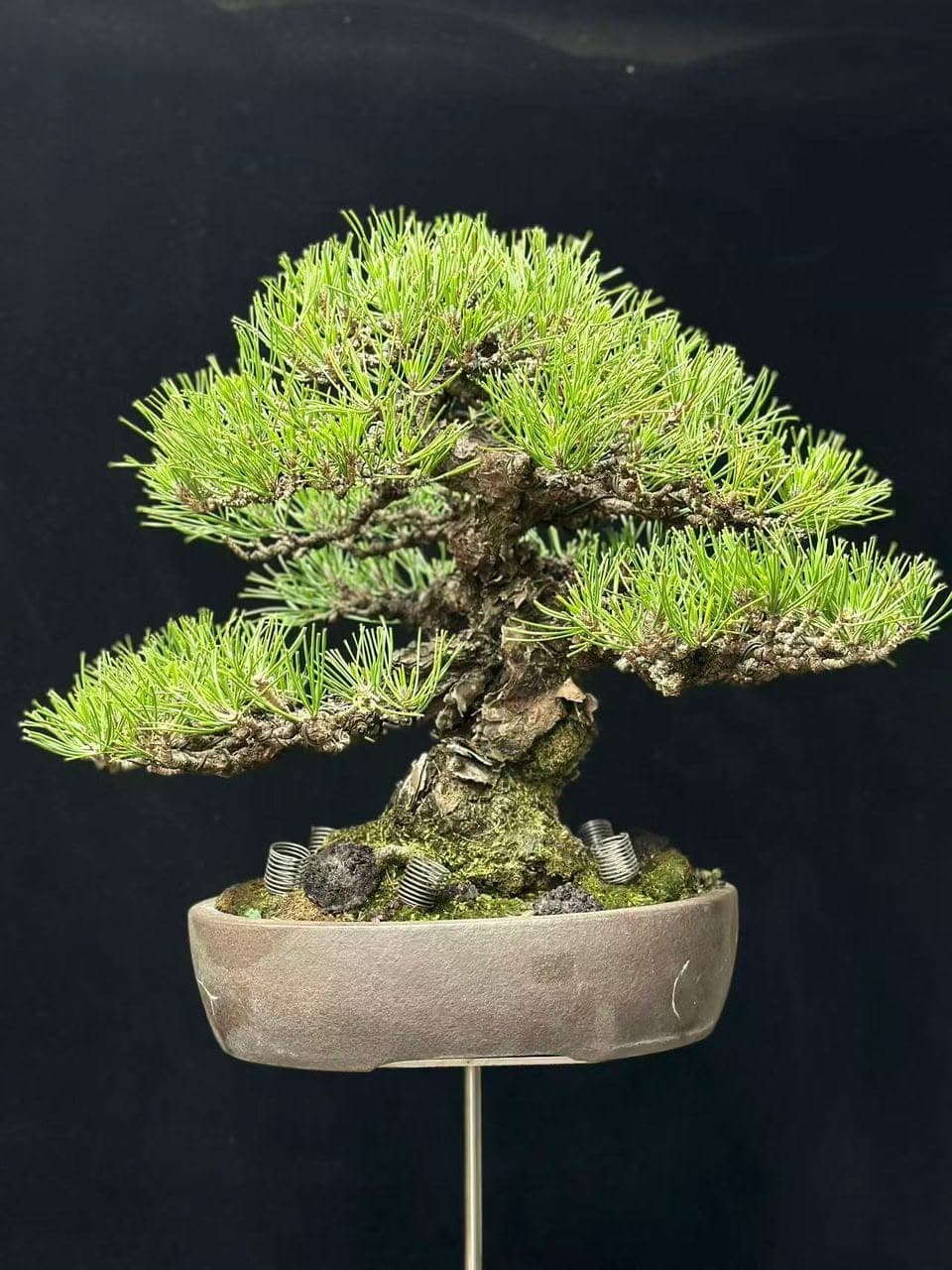
Japanese black pine is a temperate species being asked to live 1° north of the equator. It can be done — the tree on this site has done it for years — but the standard Japanese calendar does not transfer.
Forget the dormancy-based schedule
Techniques written for Japan assume a cold winter that triggers dormancy and a single spring flush. Here the tree grows more or less continuously and pushes weakly at unpredictable times.
Decandling
Decandling works, but timing is by tree vigour rather than by date. Only decandle a tree that is genuinely strong; a weak pine that is decandled in this climate may not push a second flush at all, and you will have spent its reserves for nothing.
Sun and airflow
Full sun, always. Pine in shade here goes leggy and fungal within weeks. Airflow matters as much as light — a pine crowded against a wall in Singapore humidity is asking for needle cast.
Choose the cultivar
Standard Pinus thunbergii struggles to reduce enough for small sizes here. Short-needle cultivars such as Senjumaru make shohin-scale pine realistic.
Accept the ceiling
Your pine will probably never have the bark or the needle density of one grown in Japan. It can still be a very good tree. Judge it against what is achievable here.